The Village Solar Project will provide solar generated electricity to 40 households in a village in the Indian state of Uttar Pradesh. The VSP is being implemented on behalf of Pardada Pardadi Educational Society (PPES) whose Community Development Division will help ensure the project’s long term success. The project has partnered with Boond Engineering & Development to construct a micro-grid to generate and distribute electricity. The funds raised during the GoFundMe campaign will be used to cover the capital costs, while the project will employ a “pay as you go” system to recoup the initial expenditure for future investment in project’s expansion.
What is a micro-grid?
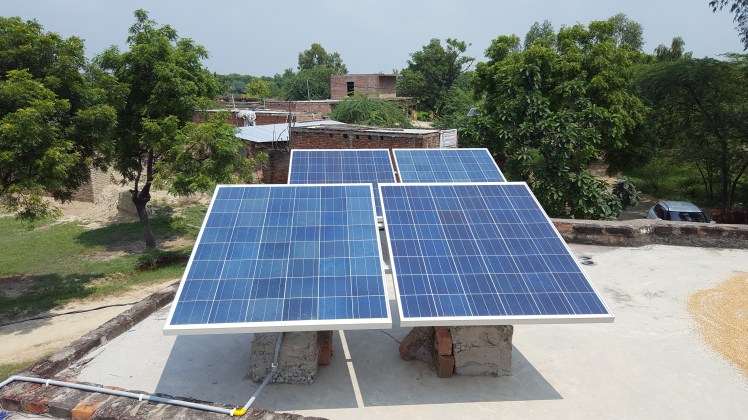
A micro-grid, as the name suggests, is a very small electric grid. In this case, the project will install four 200 Watt solar panels, for a total of 800 Watts, on the roof of the village entrepreneur (explained below).
The electricity will be stored in eight batteries. The large battery storage capacity allows the system to offer three days of back-up energy storage. This is especially important during the monsoon season when rain can hinder energy collection.
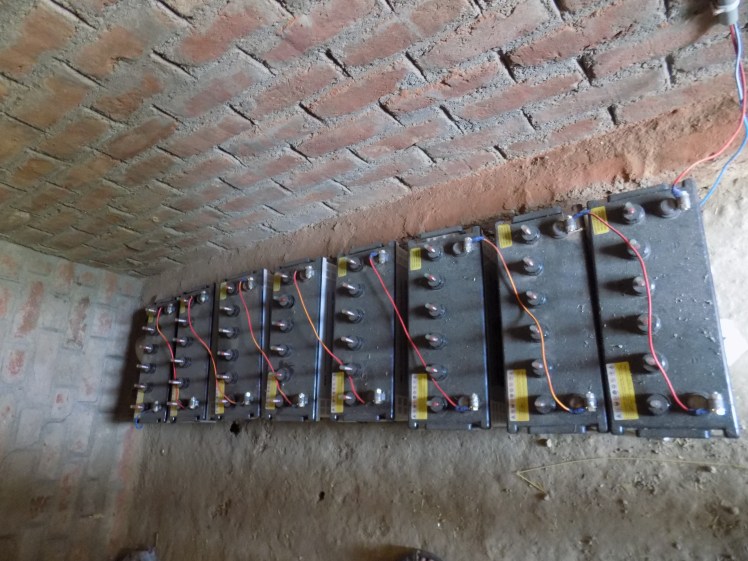
The system uses direct current (DC) electricity. DC is efficient for small systems and prevents electricity theft. The electricity passes from the batteries to the Central Charging Station (CCS).
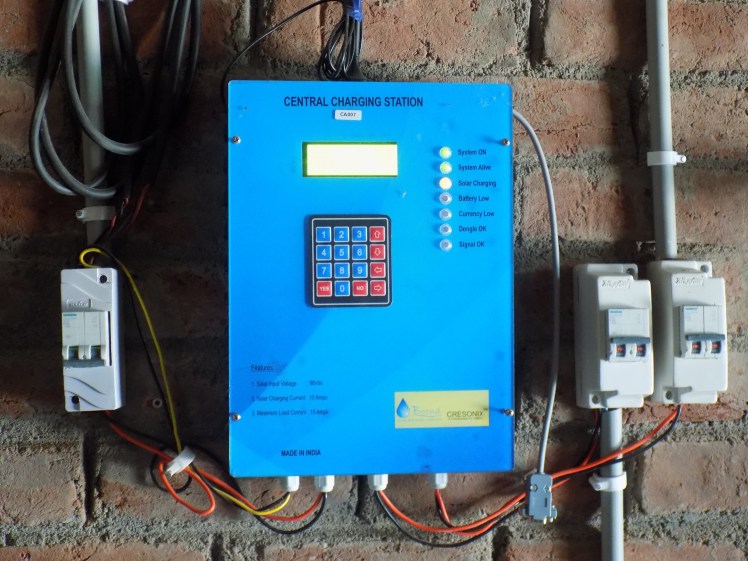
The CCS is connected remotely to the project’s partner company, Boond, in Delhi. The grid can be monitored and managed remotely using Boond’s software. The CCS will be housed and controlled locally by the villager, referred to as the project entrepreneur. When users wish to purchase electricity, they must bring cash and their dongle, which is provided during installation, to the CCS. The entrepreneur will connect the dongle to the CCS and place as little as 1 rupee (equivalent to about 1.5 cents US) recharge on the dongle. Once the villager connects the dongle to their personal DC energy meter located in their home, they may consume the electricity they have purchased.
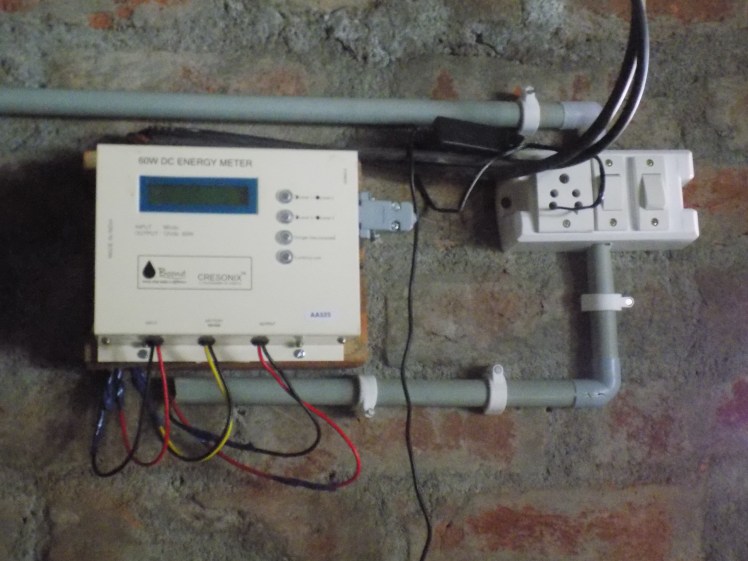
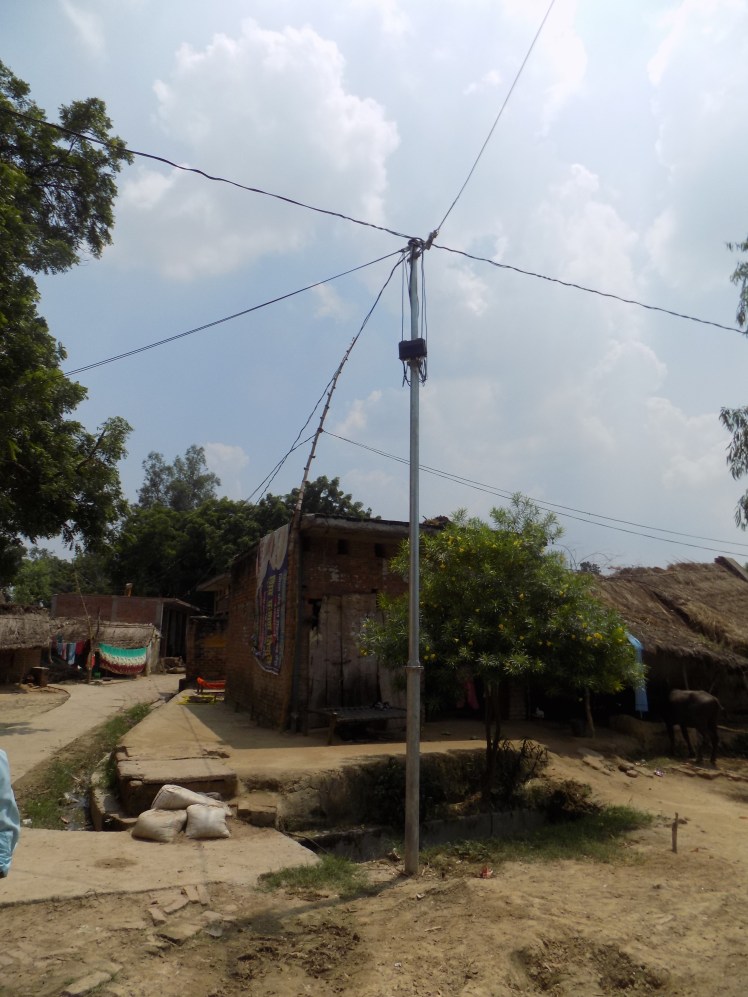
Electricity is sent from the CCS to the user via power lines which the project will install.
The project will offer both 20 and 60 Watt home systems. We anticipate that the majority of users will opt for the 20 Watt system, which includes the DC energy meter, dongle, two LED light bulbs, one tube light, and an electrical outlet for phone charging and fan use. To sign up for the grid, consumers will be required to pay a one-time installation fee of 650 rupees, which is equivalent to approximately 10 dollars US.
How does it work?
The system necessary to support and maintain the micro-grid is simple. The key member is the entrepreneur. The entrepreneur will house the solar array, batteries, and the central charging station. This person will be responsible for cleaning the panels, selling electricity to the users, and calling a technician if there are any problems with the system. The entrepreneur will be paid a percentage of the total solar credits purchased by the village. Users will purchase electricity credits from the entrepreneur, and the entrepreneur will in turn purchase electricity credits from Boond via mobile phone. The entrepreneur will receive financial compensation from Boond when electricity credits are purchased. Part of the revenue will also go to pay Boond for software use and management.
The project will also include a trained technician to repair any problems with the system. PPES has graciously offered to assign an electrician to this role. The electrician will be trained by Boond during micro-grid installation. In the event that the technician is unable solve a problem, Boond will provide additional technical support. Javed Khan, village coordinator for PPES, will also help with community development, and will help ensure the long-term success of the project. We hope that he will also help expand this project in the future. During the expected 20-year life of the system, batteries and other parts will need replacing. The money generated from electricity sales will pay for these costs, and Boond will source the materials. The remaining balance from electricity sales will be deposited into a bank account devoted to the project to create a revolving fund to contribute to the capital costs of future micro-grid expansion.
 The Village Solar Project